Below are black cathodic electrocoat (CED) parts finished in our plant, covering stainless steel, nickel-plated parts, die-cast aluminium, silicon-steel stator cores and galvanised steel. All shots were taken before dispatch with no retouching, so you can judge film coverage at a glance, including edges and deep cavities. Only a selection is shown; most of our production cannot be published online for confidentiality reasons.
Only a selection is shown; most of our production cannot be published online for confidentiality reasons.
The parts shown here are either cleared for publication by the customer or fully anonymised, so no customer brand, part number or logo appears in the photos. Much of our day-to-day work (MIM precision parts, stamped springs and shields, folding-hinge pivots, magnetic components, consumer-electronics visible parts) is covered by non-disclosure agreements and cannot be published. If you want to see work similar to your own part, contact us for anonymised photos, or simply send a sample for a trial run.
Stainless steel carries a dense passive film, so adhesion is the real barrier for this family. Every part below went through an activation pre-treatment, and no bare metal shows through at hard-to-coat areas such as the inside of bends, bore walls, mesh walls or deep cavities.
View larger
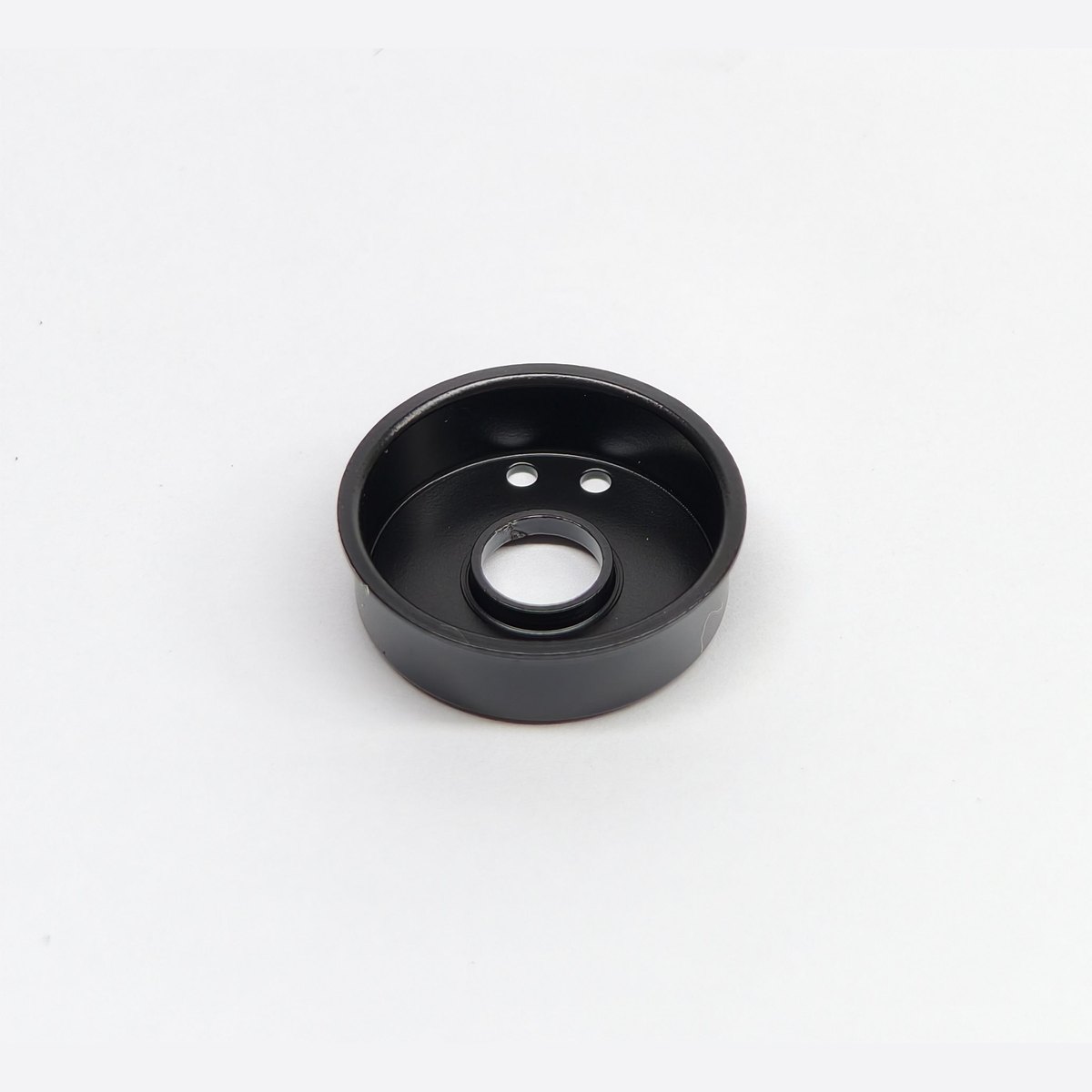
A ring with a closed base: the bore and outer diameter are coated in one pass, with no misses at the bottom of the cavity.
View larger
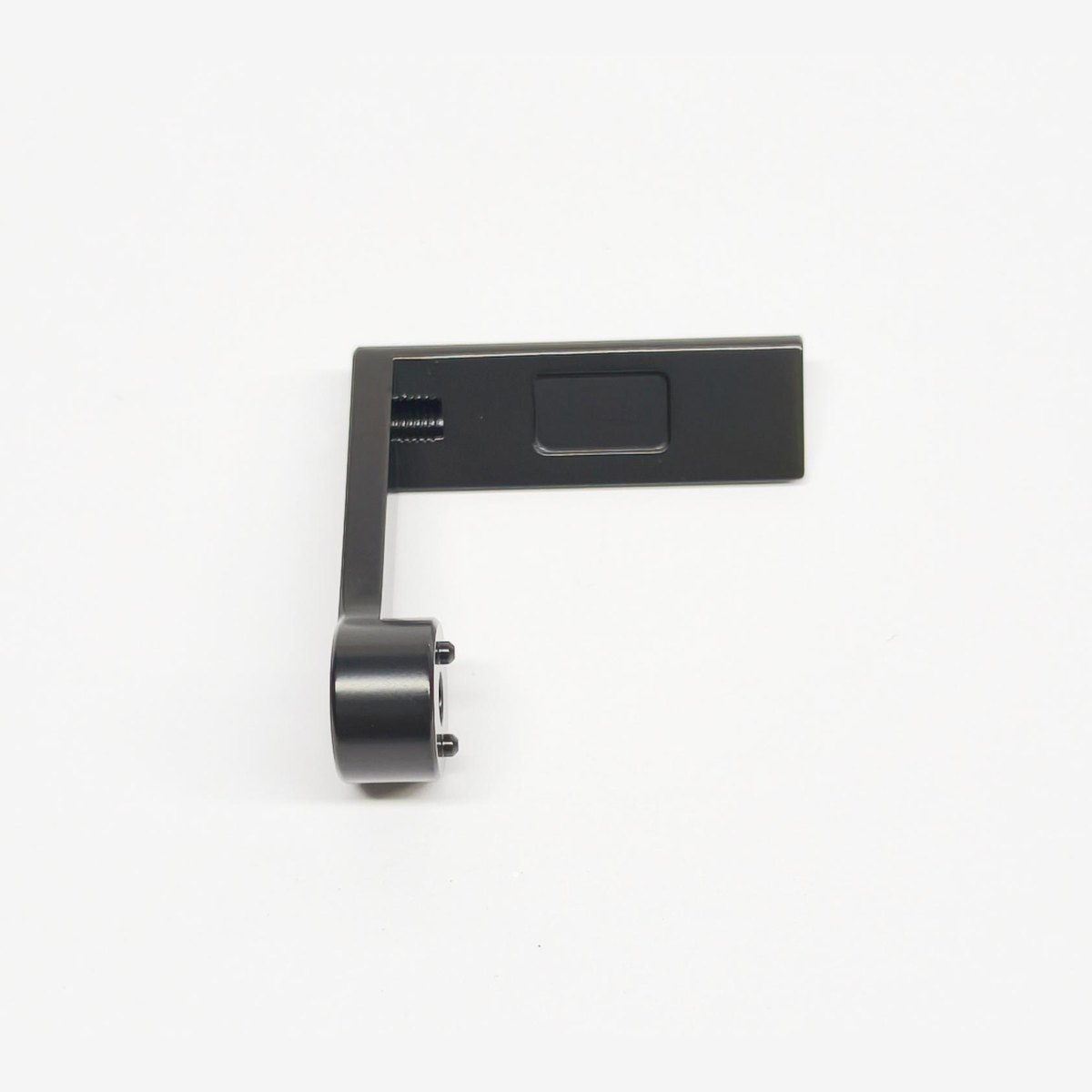
A formed and bent part: the coating runs continuously over the journal and the inside of the bend, with no paint build-up or sagging on the edges.
View larger
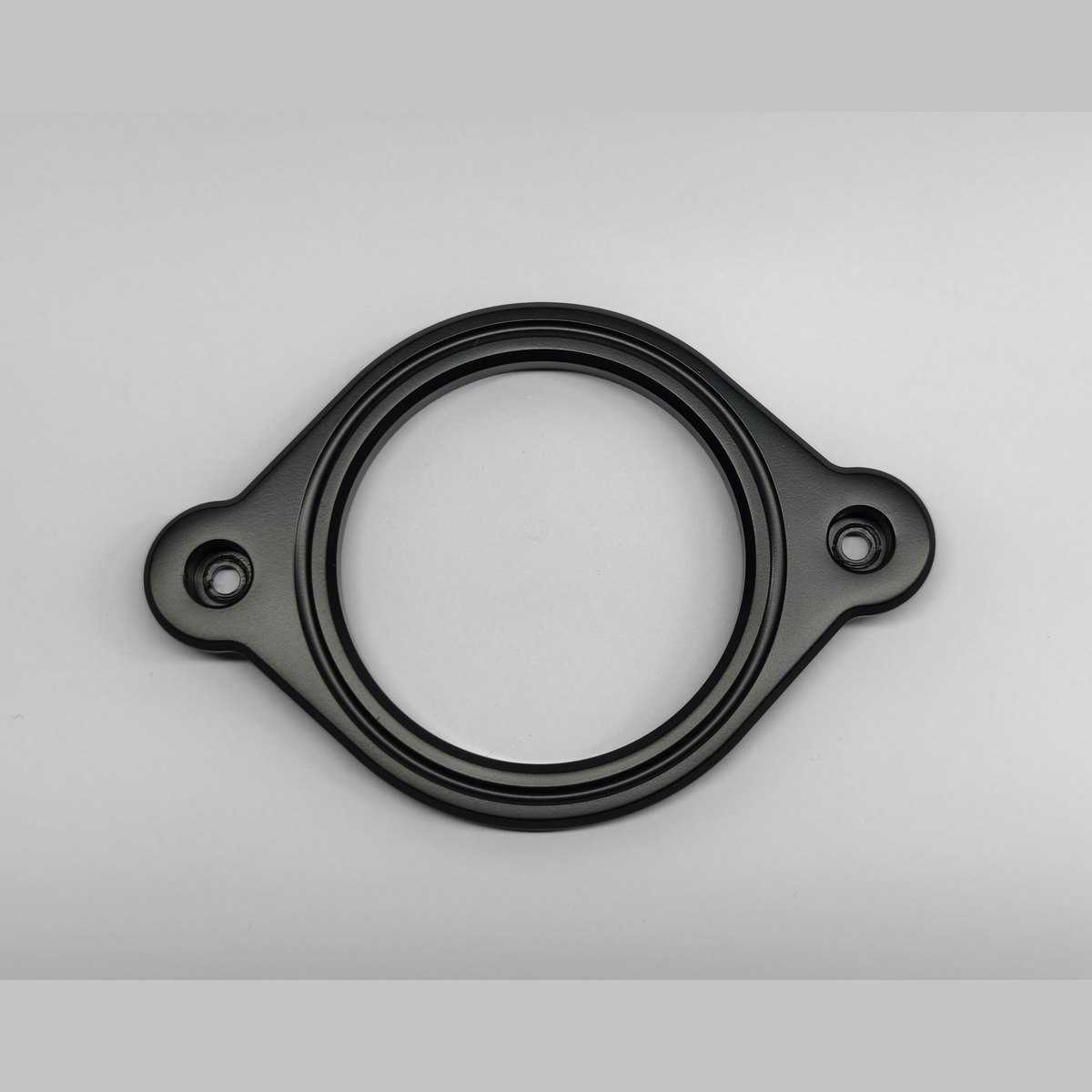
A part with two mounting lugs: no bare metal at the hole edges and a uniform matte black finish.
View larger
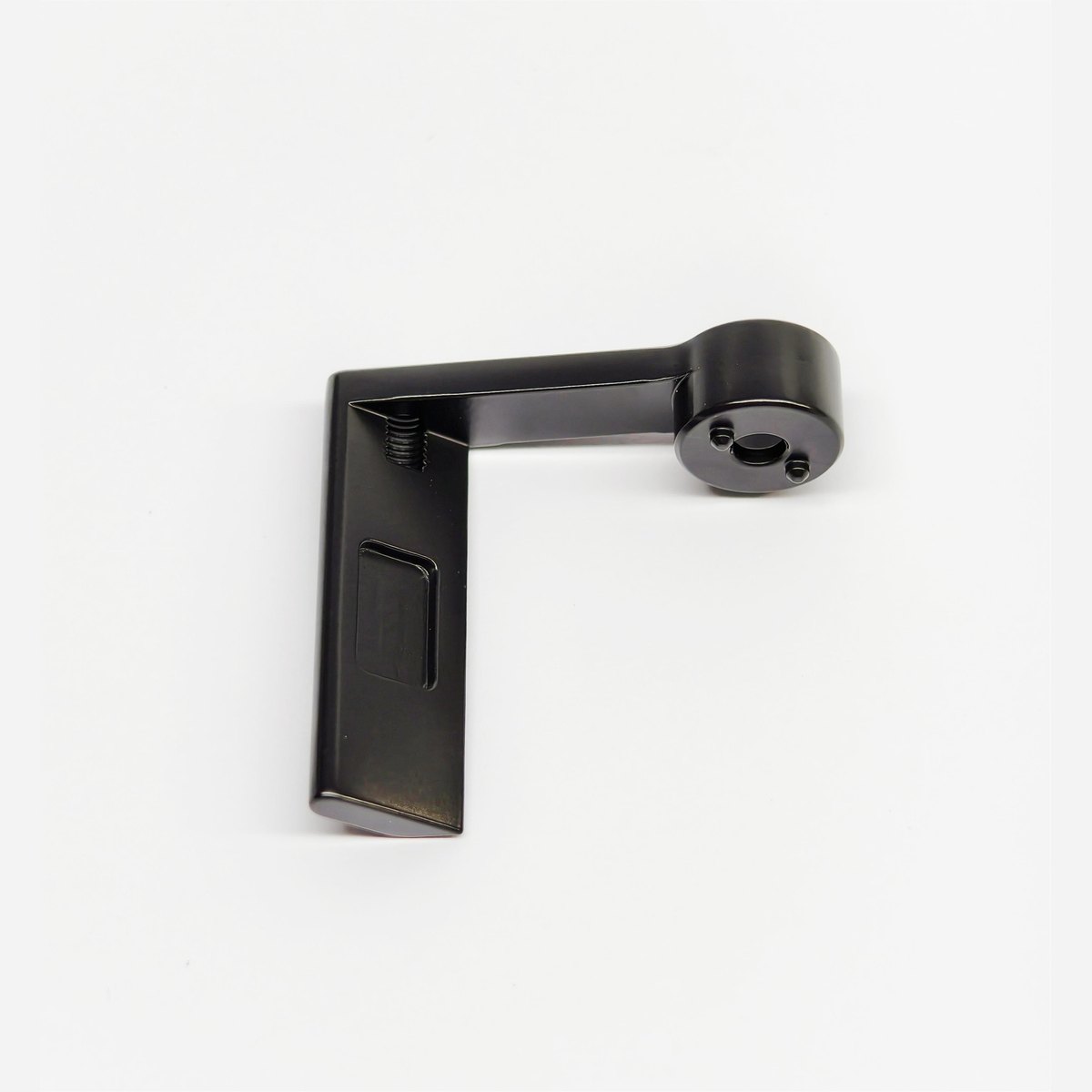
A bent part with a bore: both the bore wall and the inside of the bend are fully coated.
View larger
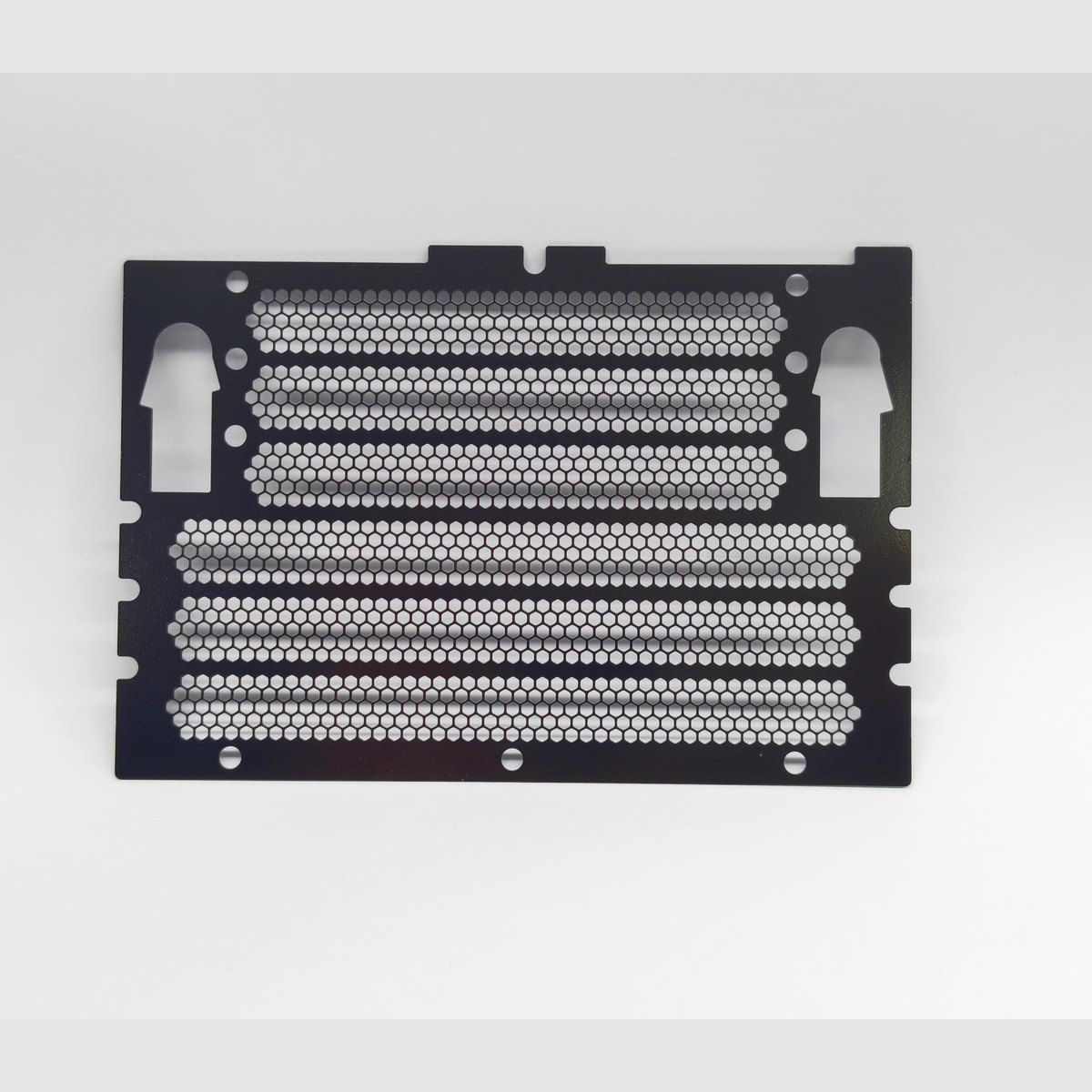
A densely perforated part: mesh walls and ribs are coated at the same time, with no blocked holes and no bare metal.
View larger
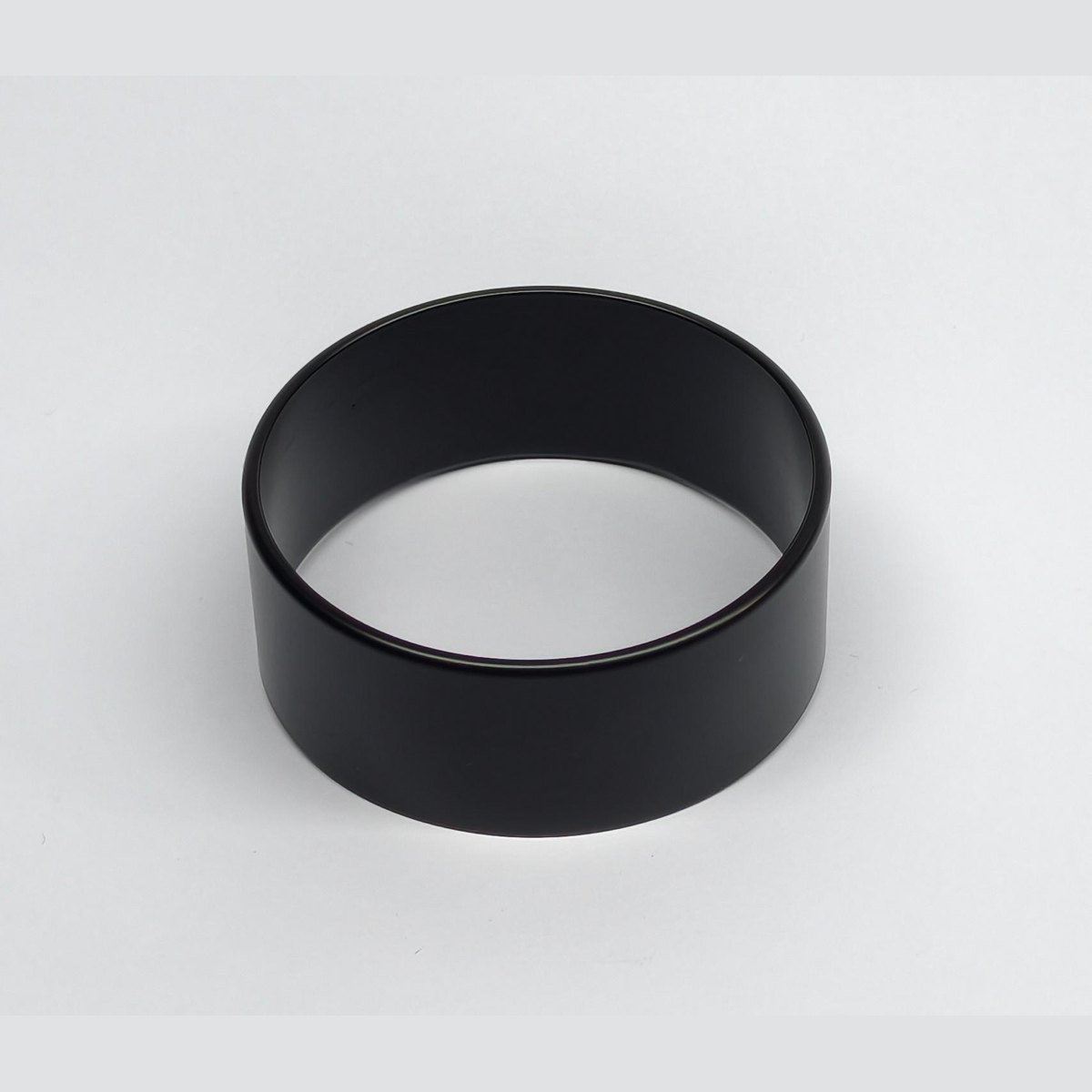
Nickel conducts better than a passivated stainless surface, so adhesion is easier to secure and the film thickness matches inside and outside.
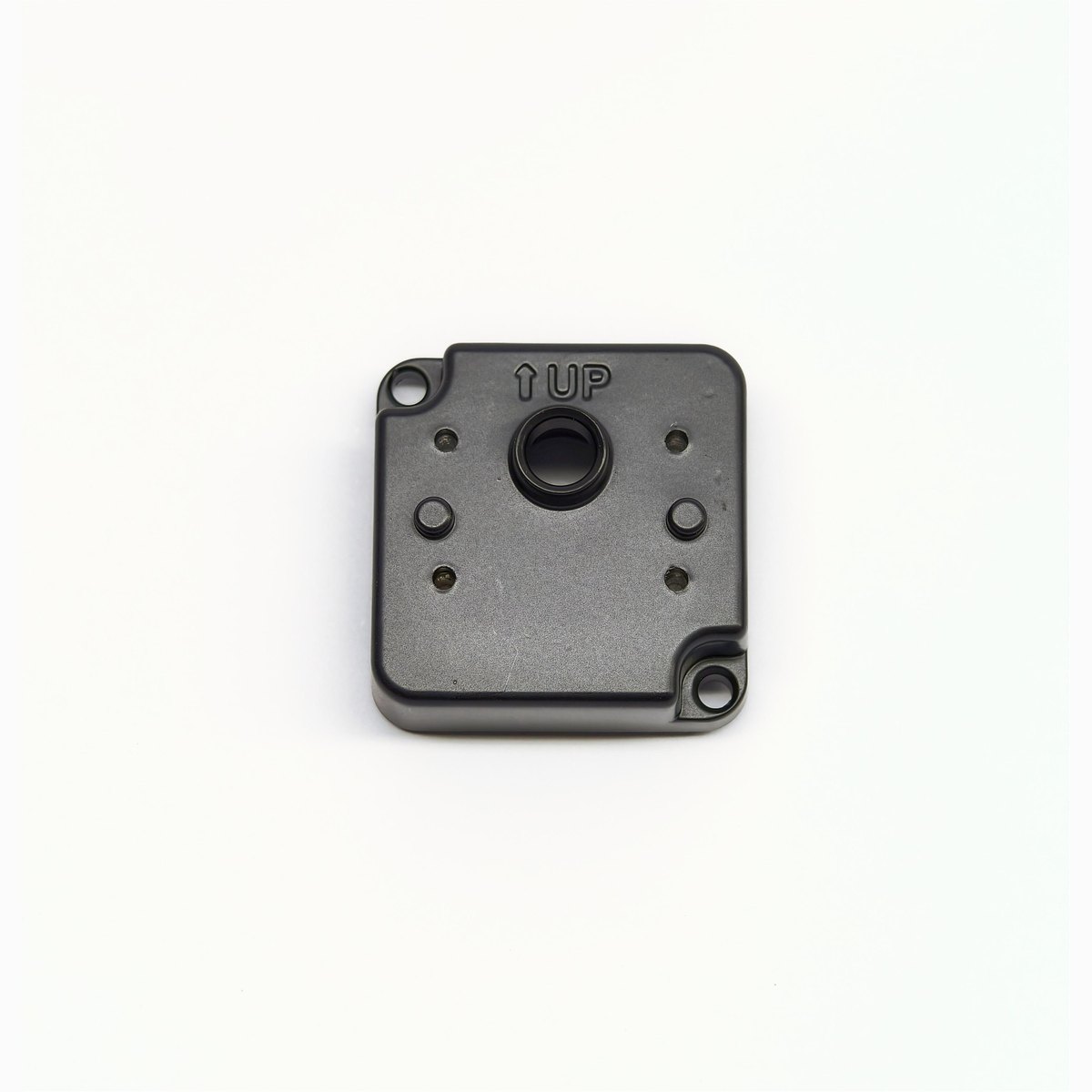
Aluminium is an amphoteric metal and dissolves in a weakly acidic e-coat bath, while porosity inside die-castings can push the coating up into blisters during baking. For these parts the decisive factors are the passivation pre-treatment and controlling trapped air before baking, not the e-coat parameters themselves.
View larger
Die-cast surfaces alternate between dense and porous zones, so the pre-treatment uses passivation; the finished outer surface shows no blistering and no pinholes.
Note: e-coat results on die-cast aluminium depend heavily on the condition of the incoming castings. If porosity is high, blistering is still a risk during baking, so we recommend supplying the caster's porosity data before sampling and comparing appearance before and after baking.
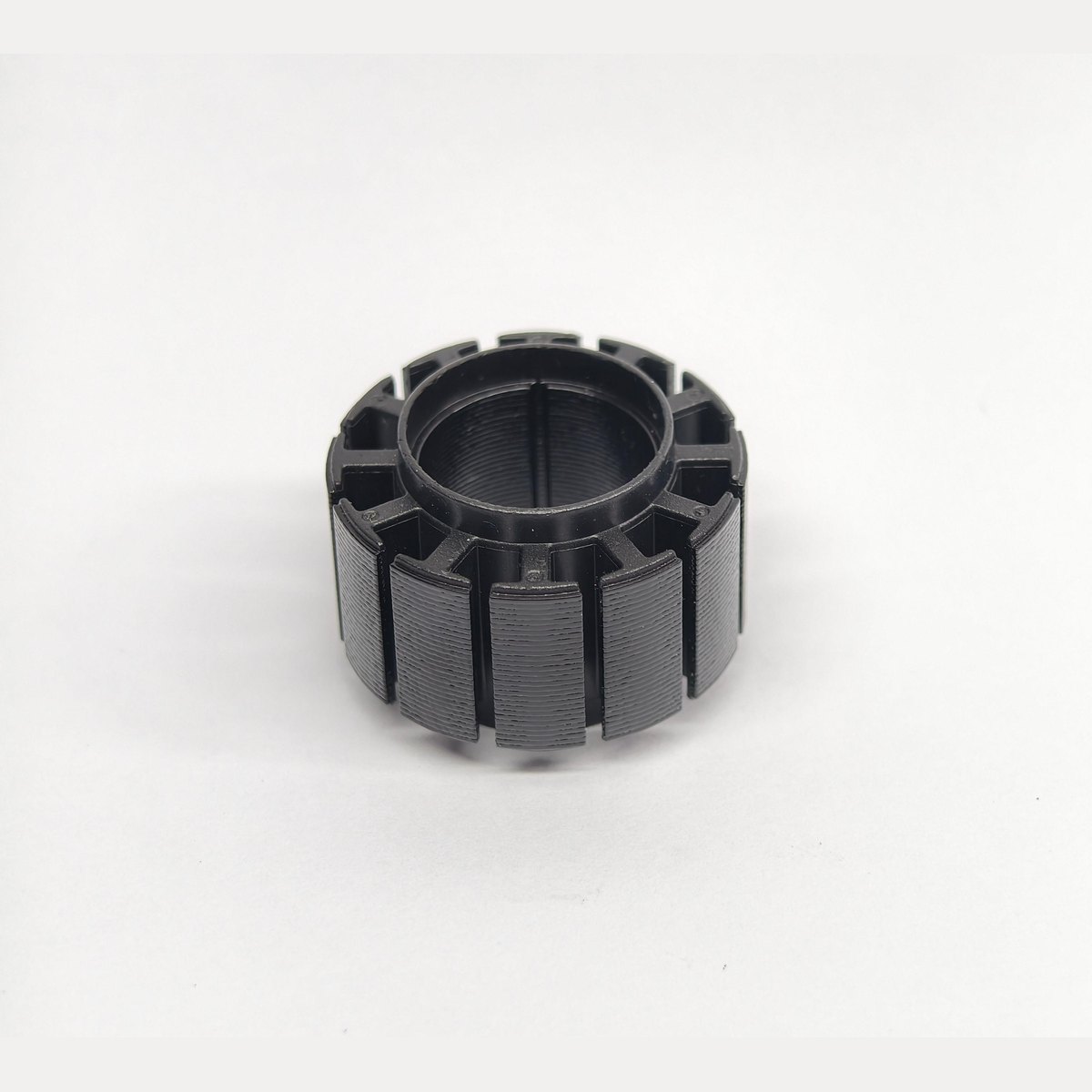
E-coating motor and transformer cores is a functional job: the coating must insulate lamination from lamination and stop the stack corroding in service. The denser the teeth and slots, the more it tests bath throwing power and drainage control before curing.
View larger
Laminations are stacked and then overmoulded; the exposed metal is e-coated, with a clean boundary against the plastic and no creep onto it.
View larger
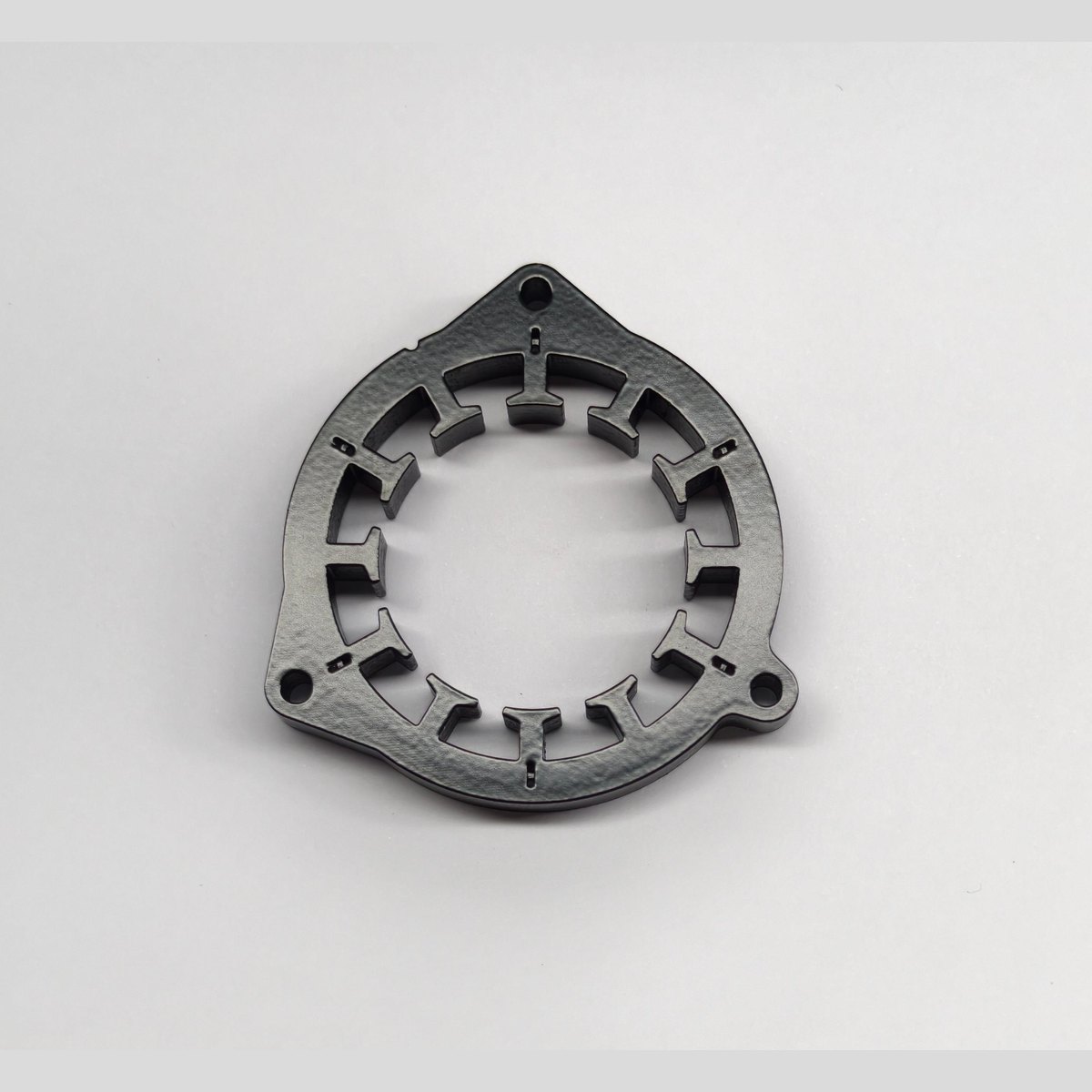
A multi-tooth profiled part: slot walls and tooth tips are coated at the same time, with no film build-up on the edges.
View larger
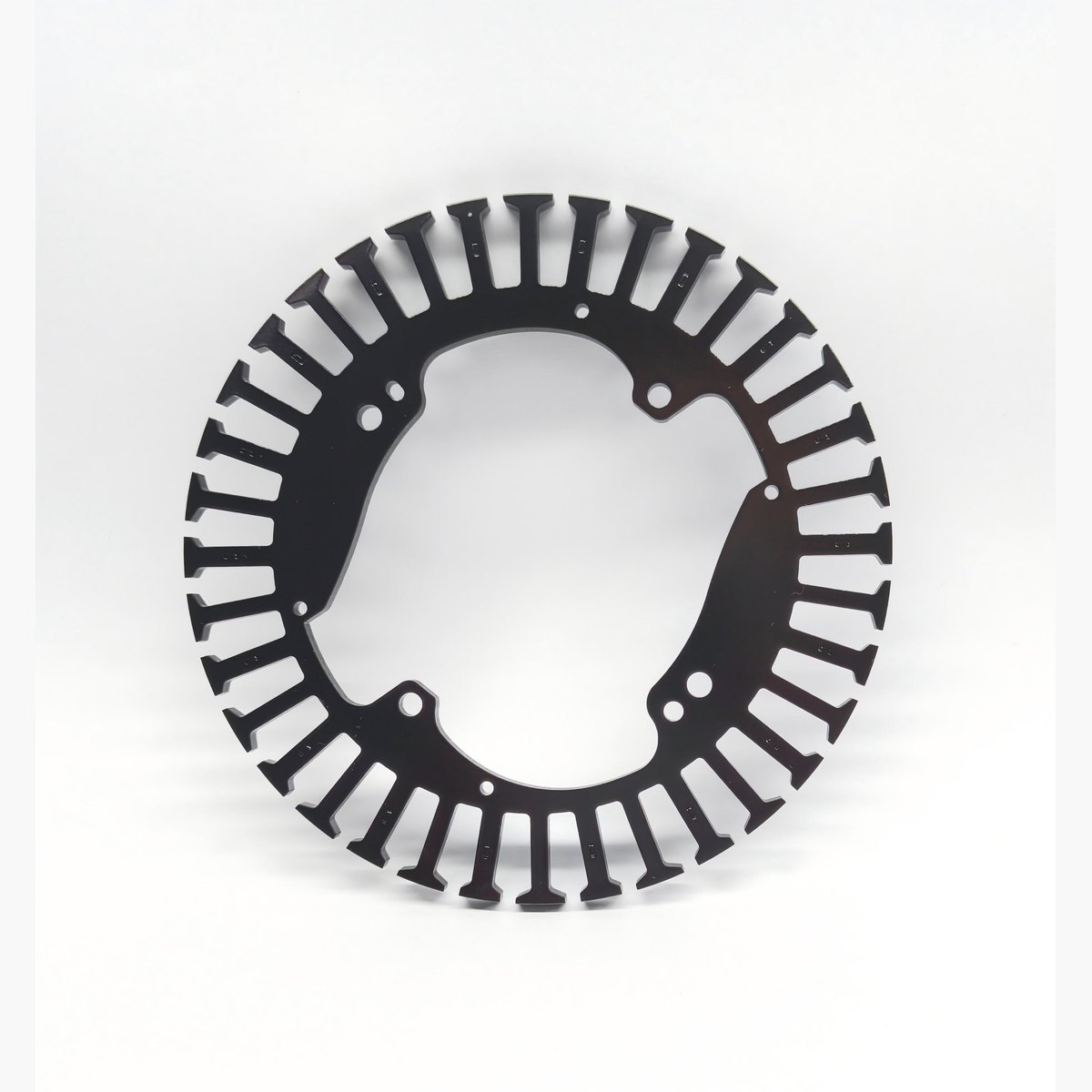
A fully slotted multi-tooth ring: the coating is continuous inside the slots, delivering both inter-laminar insulation and overall corrosion protection.
Galvanised parts put two opposing demands on an e-coat line: pre-treatment must strip oxide and oil off the zinc surface without washing through a thin zinc layer. Zinc plus e-coat gives two-layer protection, and the zinc left at cut edges provides sacrificial protection.
View larger
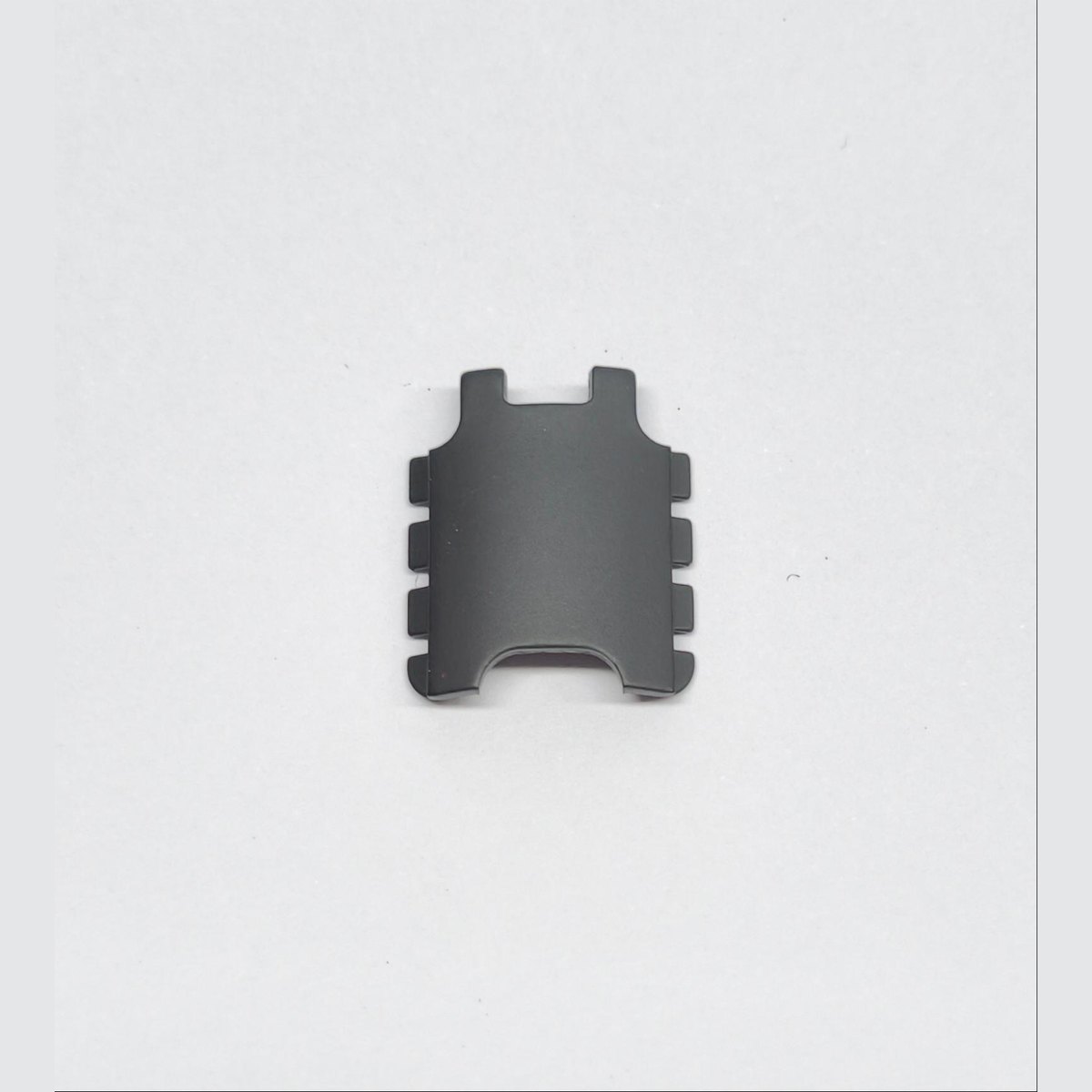
The zinc substrate and the e-coat form two-layer protection; zinc at the cut edges acts as a sacrificial anode, which is why salt-spray performance beats cold-rolled parts.
Note: please state whether the incoming material is hot-dip or electro-galvanised, the coating designation (+Z / +ZF / +ZM / +AZ) and the zinc coating weight. Electro-galvanised parts have a thin layer and a much narrower pre-treatment window, so degreasing and pickling strength must be set separately.
Part photos are more than a look-book. In e-coating, a few details in the image map straight onto process capability.
The inside of bends, bore walls, cavity bottoms and mesh walls: coverage in these places is the core advantage of e-coat over spraying. All of them are fully coated in the photos above, which shows that bath throwing power and jig design are up to the job.
E-coat film thickness follows current density, and edges attract current so they tend to run thick. Edge lines on these parts are clean, with no paint nodules or sags, which reflects how well the voltage curve and drainage on exit are controlled.
Matte black hides less than gloss: any particle, crater or water mark shows immediately. Surfaces in the photos are uniform with no visible defects, which points to stable pre-treatment cleanliness and bath filtration.
Stainless, nickel-plated, die-cast aluminium, silicon steel and galvanised parts all come off the same shop floor, which shows the pre-treatment line can switch between substrate families rather than specialising in one. That matters for hardware plants running many part numbers in small batches.
Note: all photos were taken in-house before dispatch and are for process illustration only; no customer brand or part-number information is used. Lighting and screen differences affect colour, so the agreed colour panel or a physical sample is the reference.
Common questions about product photos, incoming substrates and the sampling process.
Only a selection is shown; most of our production cannot be published online for confidentiality reasons. Much of our day-to-day work (MIM precision parts, stamped springs and shields, folding-hinge pivots, magnetic components, consumer-electronics visible parts) is covered by non-disclosure agreements, so the photos cannot be published. If you want to see work similar to your own part, get in touch to request anonymised photos, or simply send a sample for a trial run.
Yes. They are photos of parts coated in our plant, taken before dispatch and not retouched or post-processed. Out of confidentiality towards our customers, no customer brand, part number or logo appears in the photos; only the part itself is shown.
Yes. Substrates we handle day to day include ferrous grades (silicon steel, galvanised sheet, cold-rolled), die-cast and extruded aluminium, stainless steel, nickel-plated parts, titanium alloys, magnesium alloys and MIM sintered parts. Each substrate gets its own pre-treatment route, so for a quotation we need the grade, the surface condition (coated / passivated / oiled) and the part dimensions.
For standard parts we provide a free sample coating. Special substrates, formulation changes or the need for dedicated jigs may add cost, which we state clearly and confirm with you before sampling starts. Film thickness and appearance results are supplied with the sample.
Standard black cathodic e-coat is applied at 15–25 μm. Neutral salt spray test (SST): stainless steel / aluminium alloy reach 1,000 hours or more; laminated silicon-steel cores about 48 hours. For electronics requiring insulation, insulation resistance (500 V) reaches ≥10 MΩ. Final figures follow the customer drawing and industry standard and are confirmed by measured reports before mass production.