Laboratory instruments
We run a dedicated laboratory with 11 instruments covering the film thickness, colour difference, gloss, insulation resistance, dimensional imaging, abrasion, corrosion, damp heat and metallography tests used across our process. Testing turns experience into data: every batch is sampled at a set frequency and the results archived, which is where batch-to-batch consistency comes from. Swipe to browse; click an image to enlarge.
 Coating tests
Click to enlarge
 Coating tests
Click to enlarge
 Coating tests
Click to enlarge
 Coating tests
Click to enlarge
 Coating tests
Click to enlarge
 Reliability tests
Click to enlarge
 Reliability tests
Click to enlarge
 Reliability tests
Click to enlarge
 Reliability tests
Click to enlarge
 Reliability tests
Click to enlarge
 Metallographic preparation
Click to enlarge
Laboratory instrument list (11)
Swipe to see the full table →
| Instrument | Brand (origin) | Model | Test item | Notes |
|---|---|---|---|---|
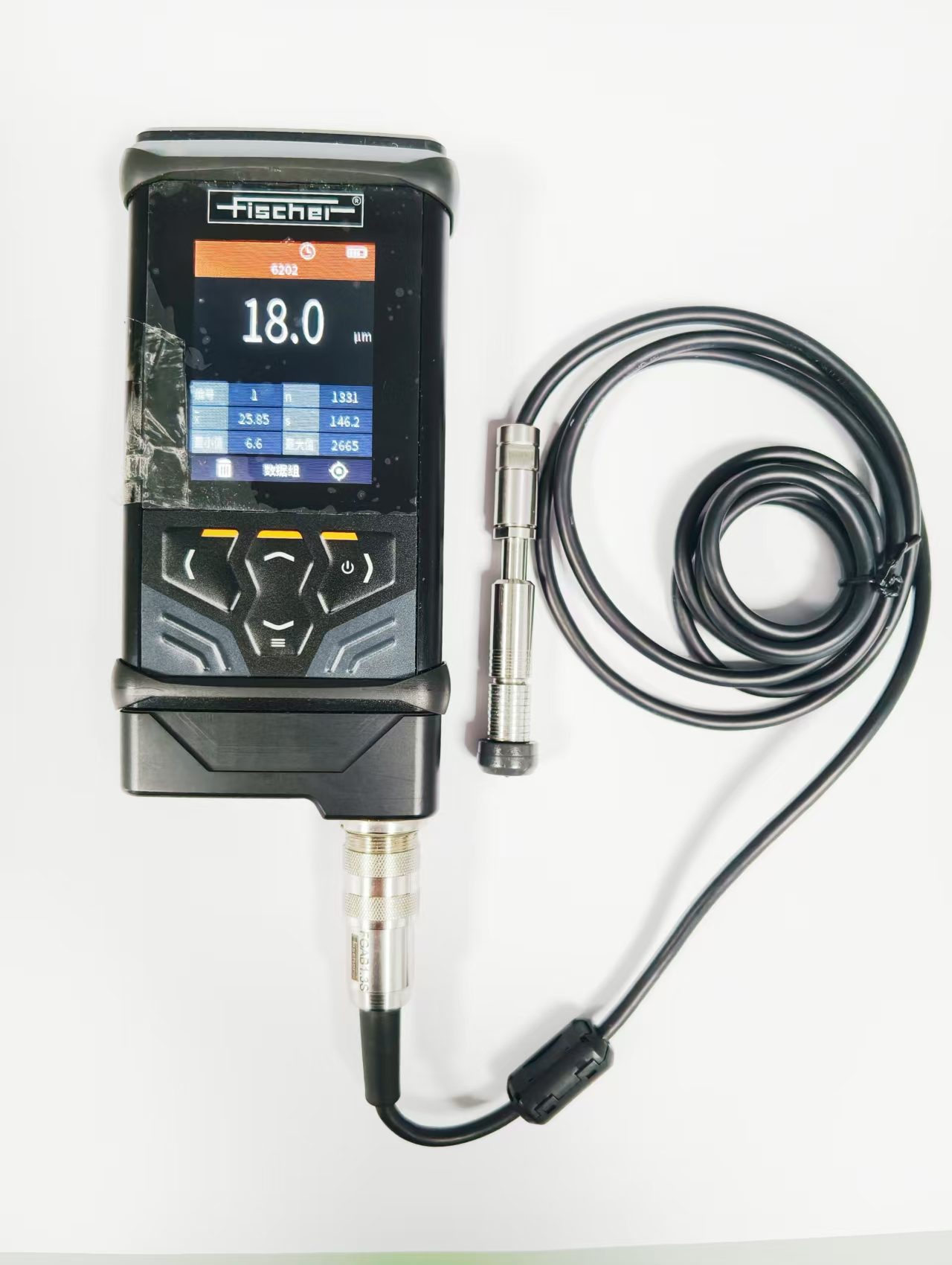
| Coating thickness gauge | Fischer (Germany) | DUALSCOPE DMP40 | Coating thickness (μm) | Non-destructive measurement with automatic switching between the magnetic (ferrous) and eddy-current (non-ferrous) methods, so ferrous and aluminium substrates can be measured directly. Used to measure the dry film thickness of black cathodic e-coat, which governs salt-spray life and assembly tolerances. |
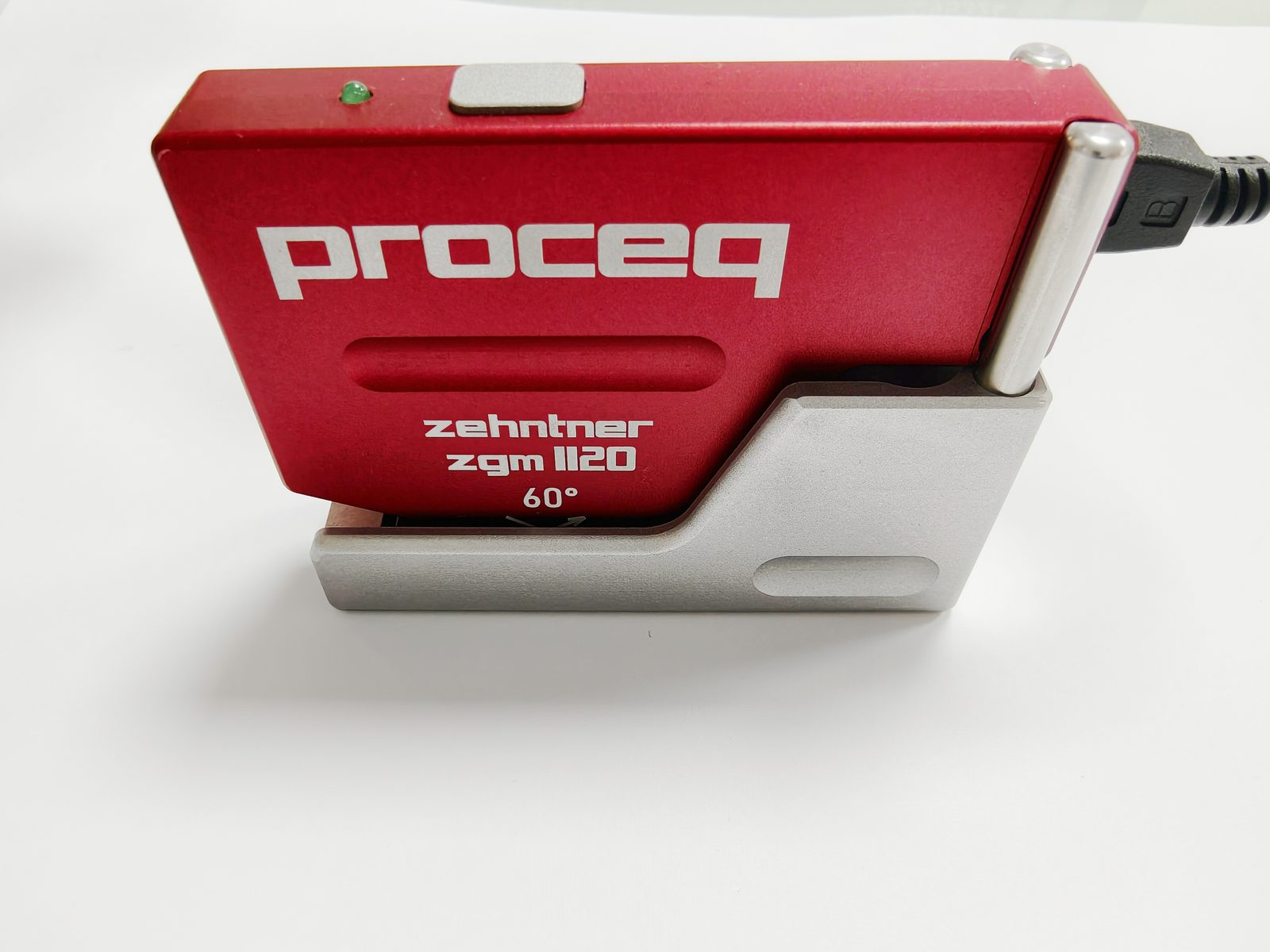
| Gloss meter | ZEHNTNER (Switzerland) | ZGM1120 | Gloss (GU) | Measures specular gloss on the coating under defined geometric conditions, separating matte black, semi-gloss black and gloss black. It turns 'looks about the same' into a GU number, so the same part keeps a consistent appearance across batches and across lines. |
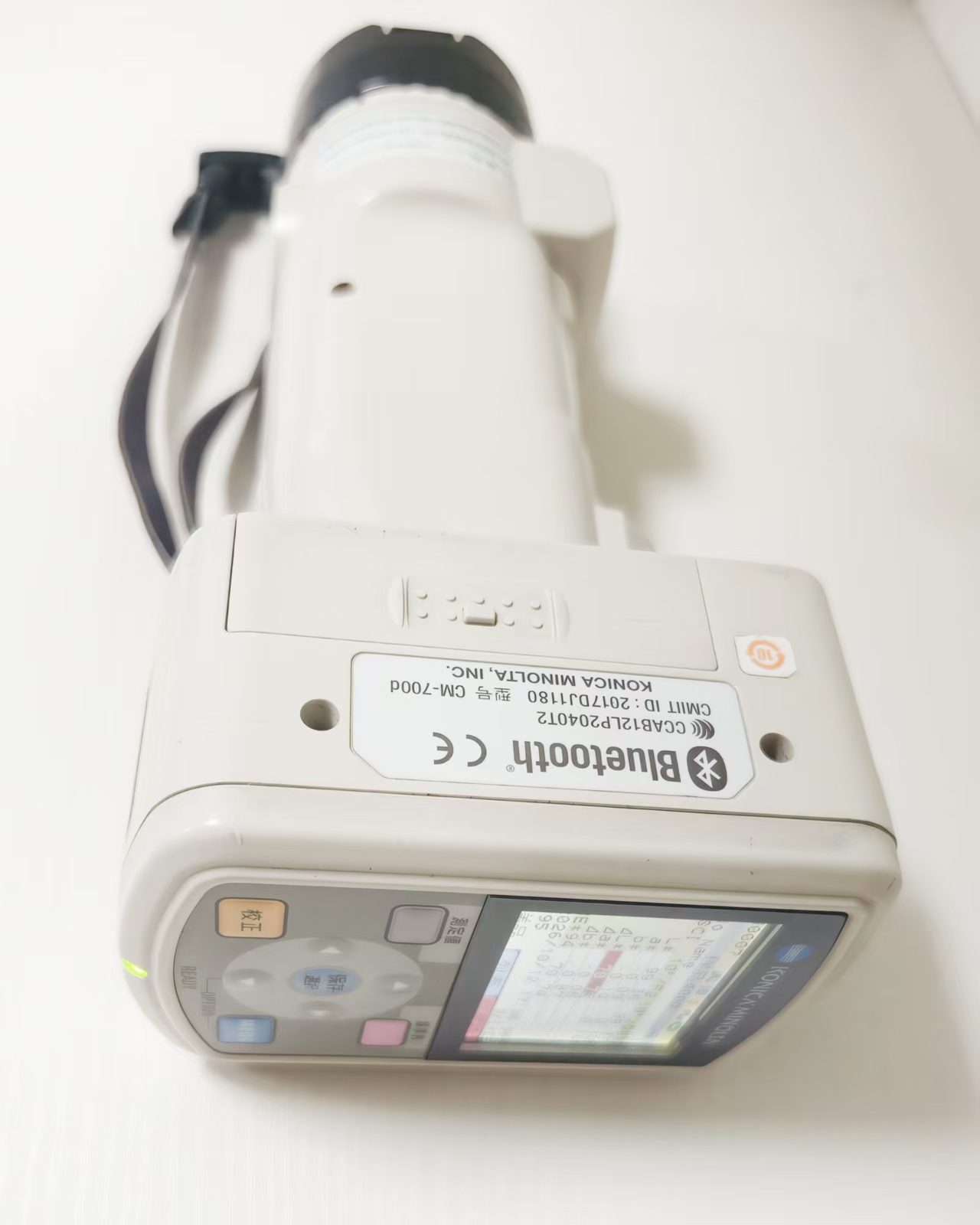
| Spectrophotometer | KONICA MINOLTA (Japan) | CM-700D | Colour difference ΔE / L*a*b* | Measures colour difference ΔE and L*a*b* values against the customer's master panel. Consumer-electronics customers often require no visible colour variation between parts in the same batch; the spectrophotometer turns that into a ΔE number. |
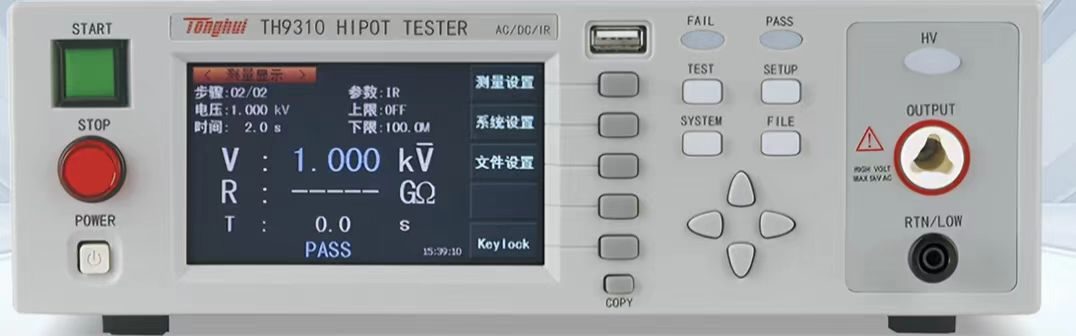
| Insulation resistance tester | Tonghui (Taiwan, China) | TH9310 | Insulation resistance (MΩ) | DC high-voltage output for measuring the insulation resistance of the e-coat. Laminated silicon-steel cores need inter-laminar insulation after coating, typically reaching ≥10 MΩ at 500 V. |
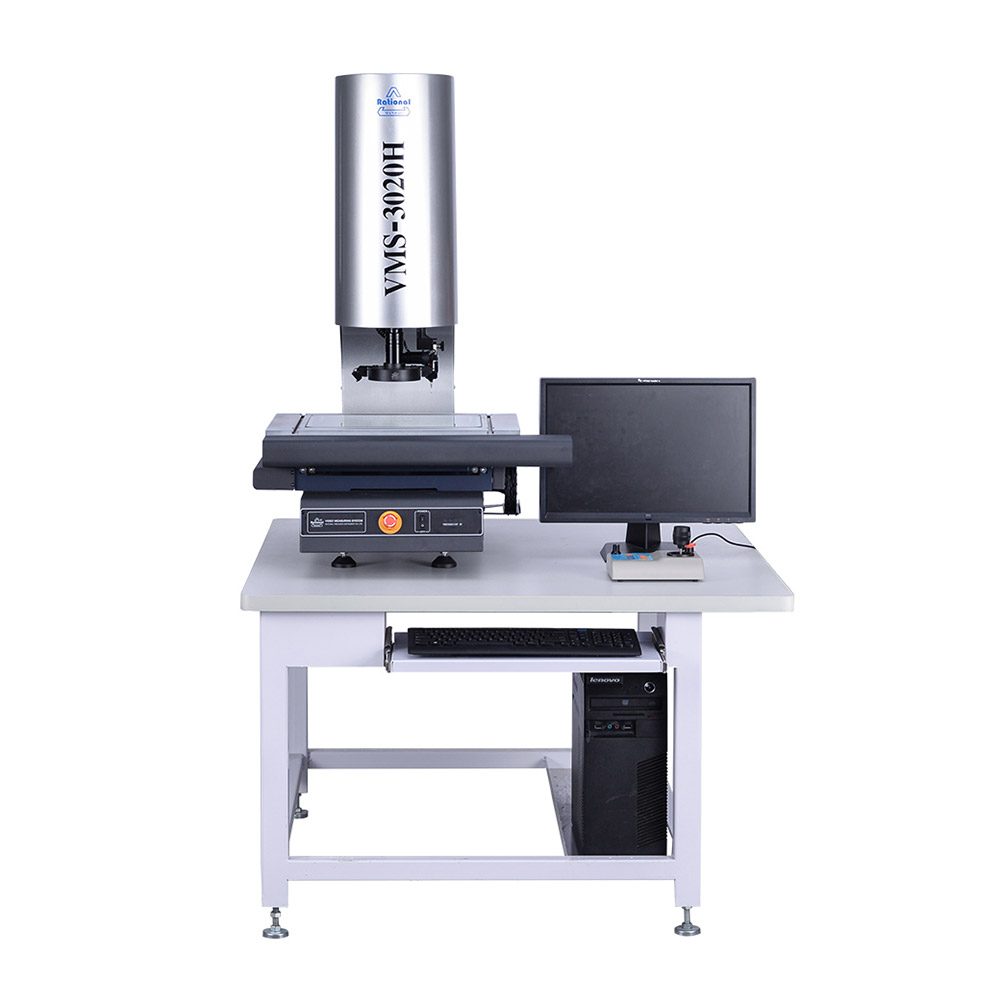
| Automatic vision measuring machine | Wanhao (Taiwan, China) | VMS-3020H | Dimensions / hole positions / profile | Non-contact optical measurement of dimensions, hole positions, profile and angles. Small hardware runs in high volumes, and the vision system verifies critical dimensions and outline quickly in batch. |
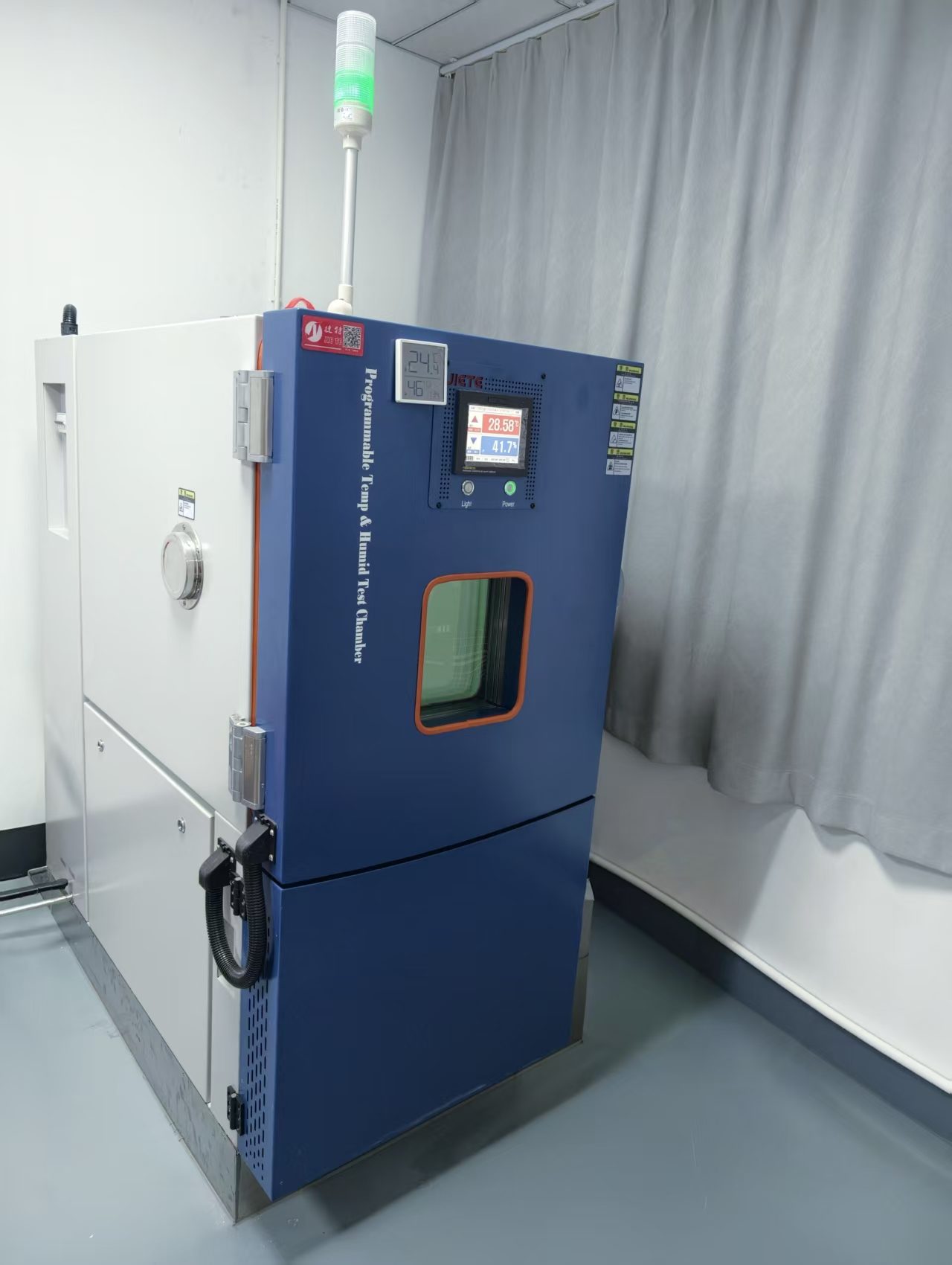
| Temperature & humidity chamber | JIETE (China) | JTH-150L-4-CPA | Damp heat testing | Provides a constant temperature and humidity environment for high-temperature/high-humidity storage and damp-heat cycling. It checks whether the e-coat blisters, discolours or loses adhesion under damp heat. |
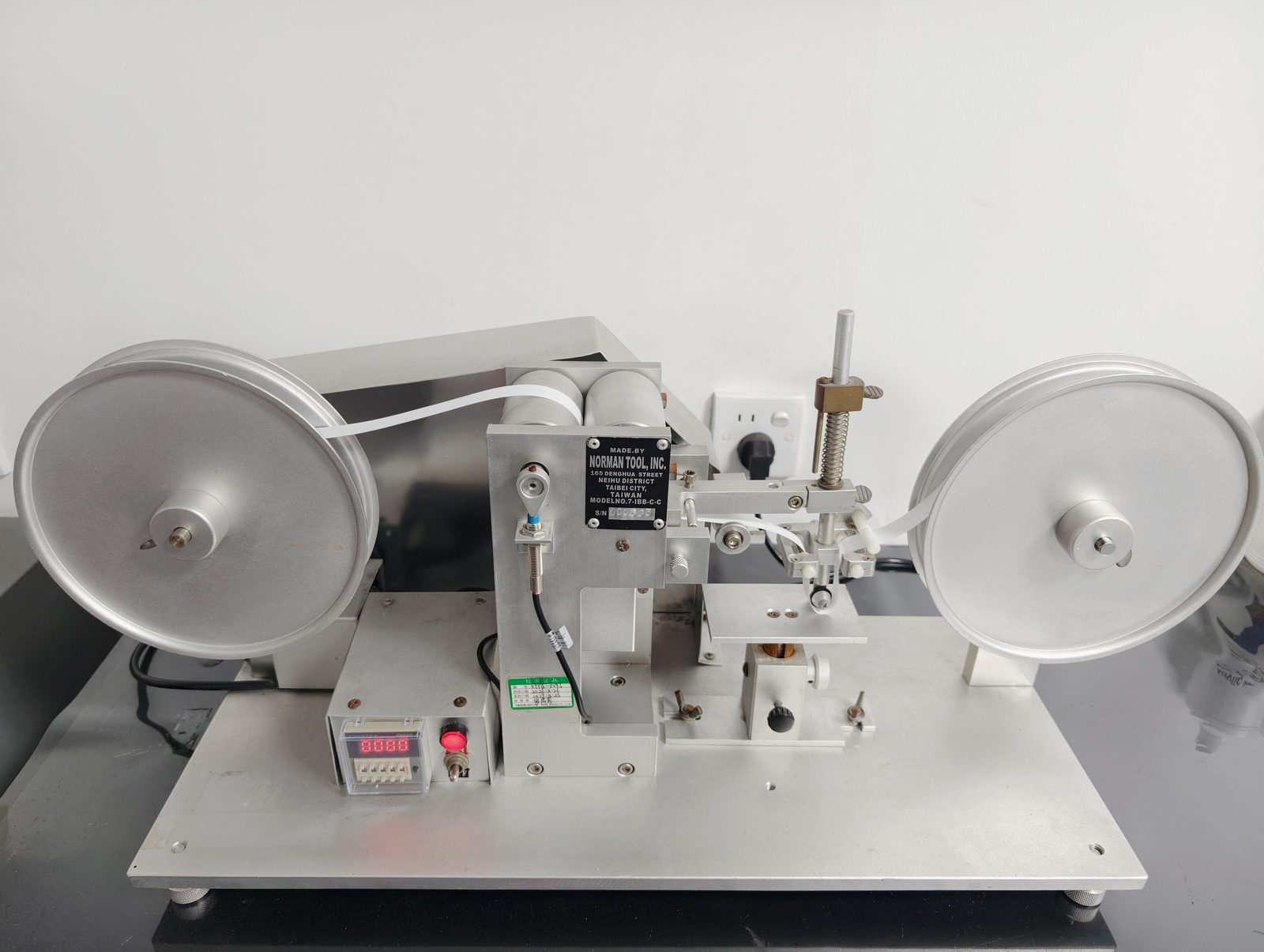
| RCA tape abrasion tester | NOMAN TOOL (United States) | S/N 090693 | RCA tape abrasion | RCA tape abrasion testing to evaluate surface wear resistance. E-coated consumer-electronics housings and buttons are commonly required to survive a specified number of RCA cycles. |
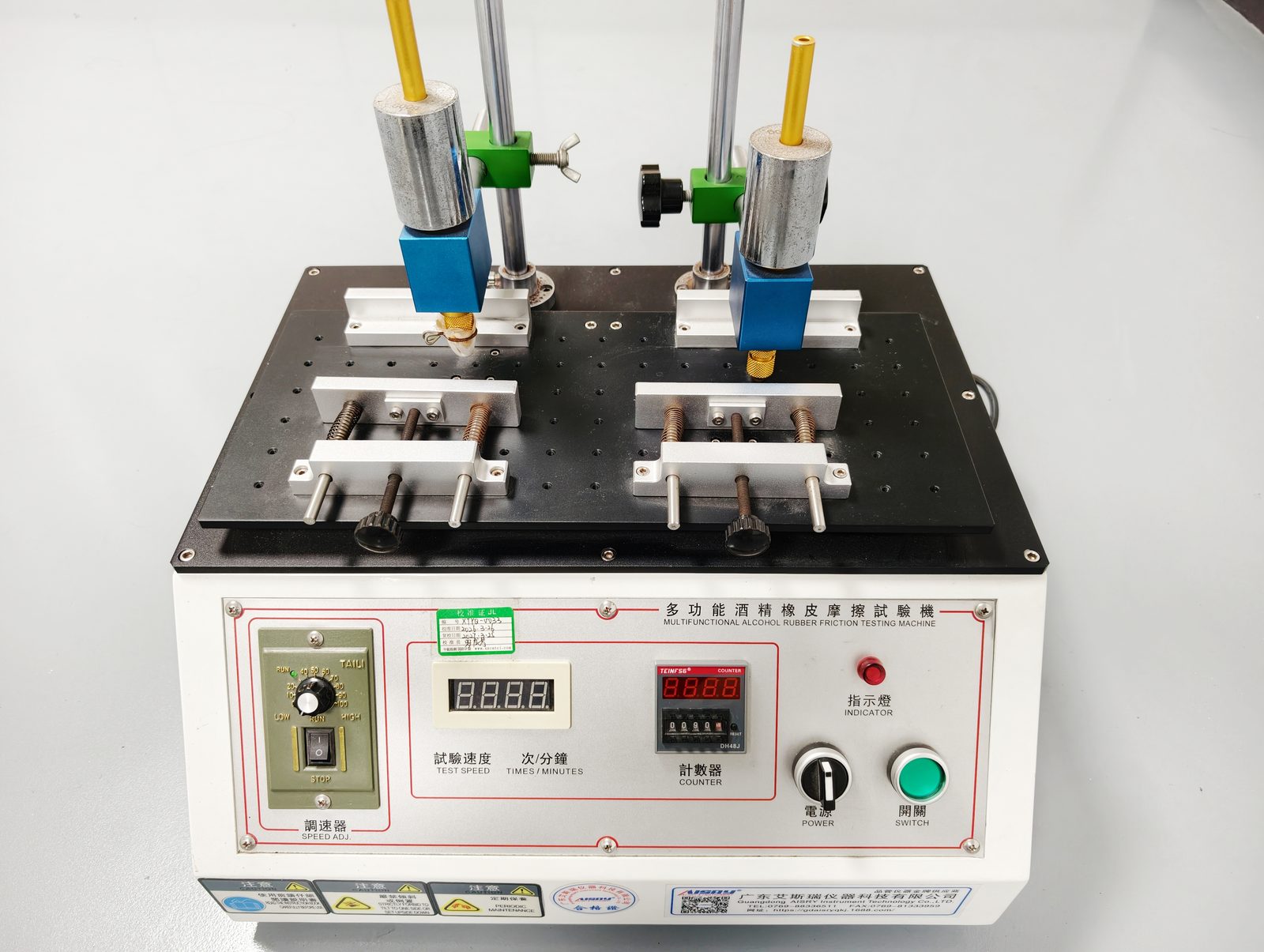
| Alcohol rub tester | AISRY (China) | ASR-56QQ | Solvent / alcohol rub resistance | Reciprocating rub with alcohol or other solvents to assess solvent and wear resistance, matching the common acceptance requirement of 'no bare metal after a set number of alcohol rubs'. |
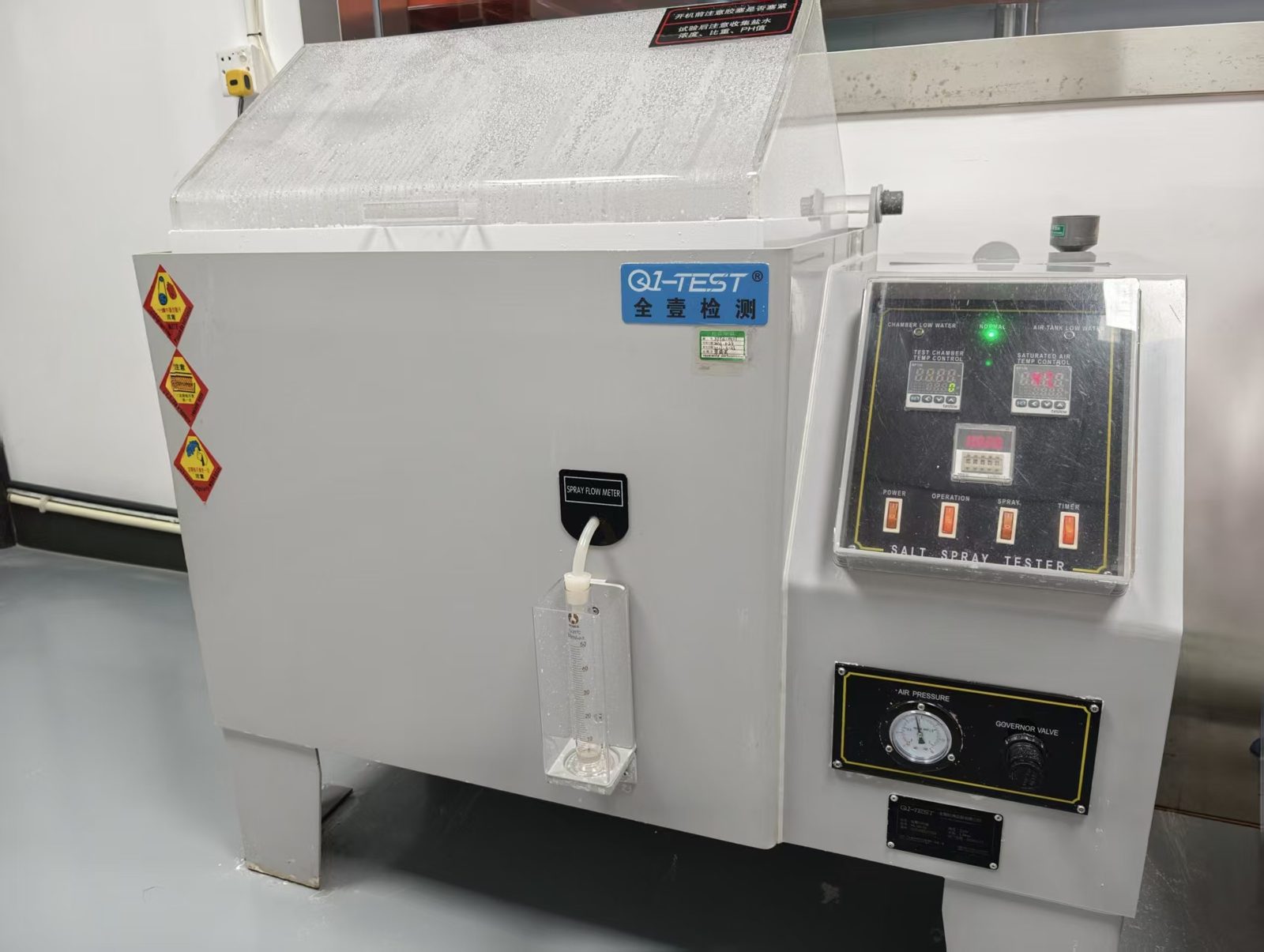
| Salt spray chamber | Quanyi (Taiwan, China) | HL-60-SS | Neutral salt spray NSS (GB/T 10125) | Neutral salt spray test NSS (GB/T 10125) to evaluate corrosion resistance. E-coated stainless steel and aluminium alloy parts reach 1,000 h or more; laminated silicon-steel cores about 48 h. |
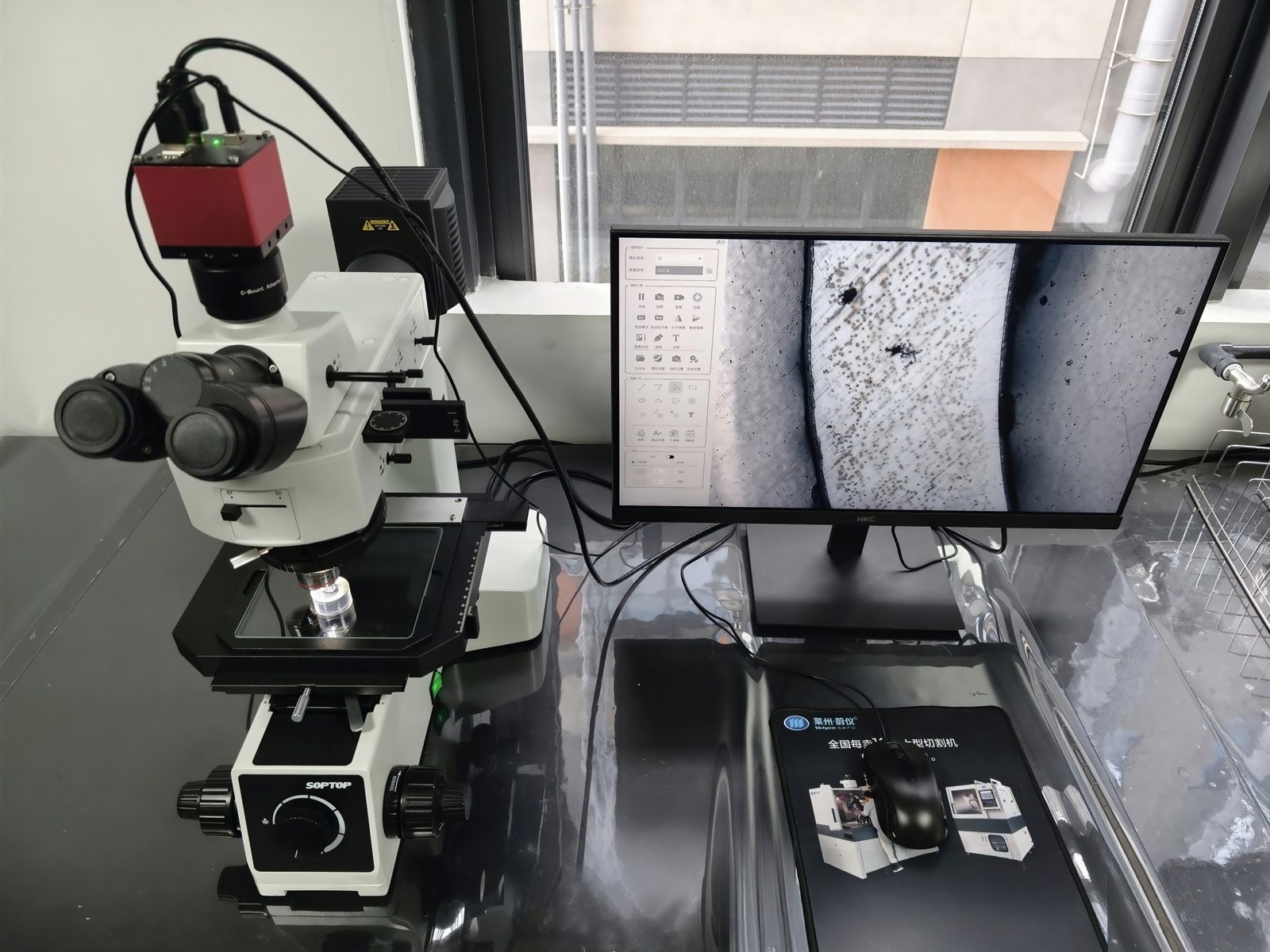
| Metallurgical microscope | Sunny Optical (China) | MX6R | Coating microstructure | Examines coating cross-sections and surface morphology to check film uniformity, pinholes and bonding. It adds microscopic verification on top of macroscopic testing and works with the automatic grinder-polisher for sample preparation. |
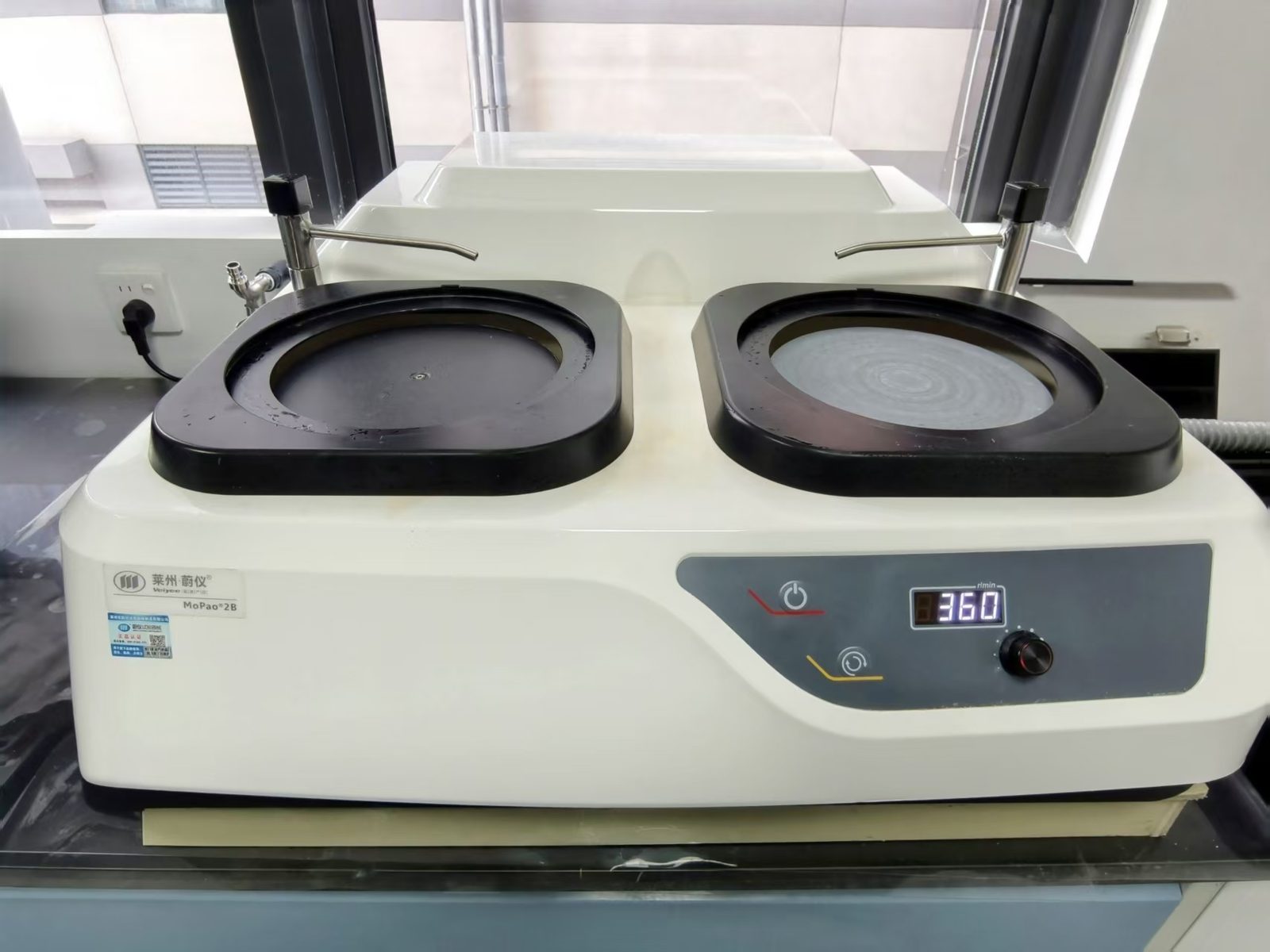
| Automatic grinder-polisher | Laizhou Weiyi (China) | Mopao2B | Metallographic specimen preparation | Grinds and polishes metallographic specimens to prepare coating cross-sections, giving the microscope a sound sample so cross-section observations are reliable. |
Test items and method standards
Swipe to see the full table →
| Test item | Method / standard | Notes |
|---|---|---|
| Neutral salt spray test NSS | GB/T 10125 | Evaluates corrosion resistance: 1,000 h+ on stainless steel / aluminium alloy, about 48 h on laminated silicon-steel cores |
| Insulation resistance test | Megohmmeter / high-resistance meter | For electrical and electronic parts needing insulation, reaching ≥10 MΩ at 500 V |
| Coating hardness | Pencil hardness GB/T 6739 | Typically 2H or harder |
| Adhesion | Cross-cut test GB/T 9286 | Typically grade 0 |
| Impact resistance | Impact tester | Checks that the coating does not chip or crack under impact |
| Full visual inspection | Visual check under a standard light booth | Looks for sags, pinholes, orange peel, particles, colour deviation and similar defects |
All instruments listed above are in routine use in our in-house laboratory, and test data is archived by batch for traceability. To confirm which tests and acceptance criteria cover your part, contact us for the test capability statement, or browse our certifications and product gallery.