Dongguan Xintai Metal Surface Treatment Co., Ltd. · Electrocoating (CED/AED) specialist Sales: +86 181 2376 0267 | Request a quote
METAL SURFACE TREATMENT · BLACK CATHODIC E-COAT (CED)

Dongguan Xintai Metal Surface Treatment Co., Ltd.
Black cathodic electrocoating and metal surface treatment specialist

Our plant sits in Guangda Manufacturing · Dalang Tech Park, Dalang Town, Dongguan, Guangdong, next to the Guan-Shen and Chang-Hu expressways, and covers 3,200 m². We develop, produce and sell coating processes for iron, stainless steel, aluminium, aluminium alloy, titanium alloy and magnesium alloy, and run two automatic plus two manual e-coat lines that consistently deliver film thickness 15–25 μm, salt spray (SST) 1,000 h+ on stainless steel / aluminium alloy, and insulation resistance (500 V) ≥10 MΩ.

3,200 m²
Plant floor area
4 lines
E-coat lines (2 automatic + 2 manual)
1,000 h+
Neutral salt spray (SST) · stainless steel / aluminium alloy
Silicon-steel laminated cores 48 h+
6 types
Metal substrate types
COMPANY PROFILE

Company at a glance

Key corporate and site information for Dongguan Xintai Metal Surface Treatment Co., Ltd., for quick reference and verification.

Basic company information

Legal name
Dongguan Xintai Metal Surface Treatment Co., Ltd. (Xintai E-coat)
Predecessor
Dongguan Xintai Coating Technology Co., Ltd., founded in 2014 (relocated to Dalang Town, Dongguan in 2024)
Registered capital
CNY 3 million (fully paid in)
Plant address
Room 501, Building 3, No. 252 Dalang Shuixin Road, Dalang Town, Dongguan, Guangdong, ChinaDirections
Main business
Metal surface treatment and heat treatment processing; spray coating; design, manufacture and sale of coating equipment; R&D and sale of metal products
Management systems
ISO 9001 quality management system and ISO 14001 environmental management system certified, both covering electrocoating; holder of a pollutant discharge permit.View certificates →
Contact
Mr. Huang · +86 181 2376 0267 · sales@xted.email
SERVICES & CAPABILITY

Services & Process

Electrocoating (CED/AED) for small metal hardware, across multiple substrates, processes and batch sizes.

C

Black cathodic e-coat (CED)

Matte black, gloss black and other black cathodic e-coat finishes. The film is uniform and dense, covers edges and cavities completely and adheres strongly — a cost-effective replacement for blackening and spray painting.

S

Multi-substrate capability

Iron-based substrates (silicon steel, galvanised sheet, cold-rolled sheet), die-cast and extruded aluminium, stainless steel, titanium alloy, magnesium alloy and MIM sintered parts — six substrate families in total.

T

Full-process inspection

A Konica Minolta spectrophotometer from Japan, a ZGM gloss meter from Switzerland and a Fischer coating thickness gauge from Germany check colour difference, gloss, film thickness, salt spray and insulation resistance item by item.View the 11 inspection instruments in our lab →

P

From pilot run to mass production

Automatic lines handle large, stable volume orders; manual lines flexibly cover small batches, high-mix runs and prototypes of complex parts. Free samples and fast delivery available.

F

Functional e-coat

High insulation, high salt-spray resistance and strong edge coverage: film thickness on burrs, radii and other edges exceeds 5 μm, and insulation resistance (500 V) reaches 10 MΩ or more — suitable for electrical and electronic parts.

A

Full appearance inspection

Several CCD appearance inspection systems check 100% of finished parts, replacing manual visual inspection to keep colour and appearance consistent.

View full process parameters and flow →

INDUSTRIES

Industries

Our e-coat service is used across the following sectors, protecting both the appearance and the durability of end products.

Consumer electronics

Precision hardware such as MIM hinges, SIM trays, shielding cans and camera brackets for phones, tablets and TWS earbuds.

Automotive electronics

Motor cores, sensor housings, LiDAR structural parts and connector shells — components with demanding salt-spray requirements.

Drones and robotics

Drone gimbal brackets, airframe metal parts and robot joint structures, balancing light weight with appearance consistency.

AI hardware and servers

Liquid-cooling server parts, heat sinks, chassis brackets and shielding parts that require insulation and corrosion resistance.

Magnetic materials

Black e-coat anti-corrosion layers for NdFeB magnets and bonded magnetic rings.

Wearables

Smartwatch cases, strap hardware and smart-glasses hinges and structural parts, seeking a fine matte-black finish.

Acoustics and audio

Speaker grilles, acoustic-chamber metal parts and microphone mesh — parts with strict colour-consistency requirements.

General hardware

Luggage hardware, furniture fittings, sanitary ware and tool parts — workpieces that need a black decorative, rust-resistant finish.

Explore industry solutions →

PRODUCT GALLERY

Product gallery

Photographed in our own plant before shipment, with no retouching. Substrates include stainless steel, nickel-plated parts, die-cast aluminium, silicon-steel stator cores and galvanised sheet, so you can judge film coverage on edges and inside deep cavities directly.
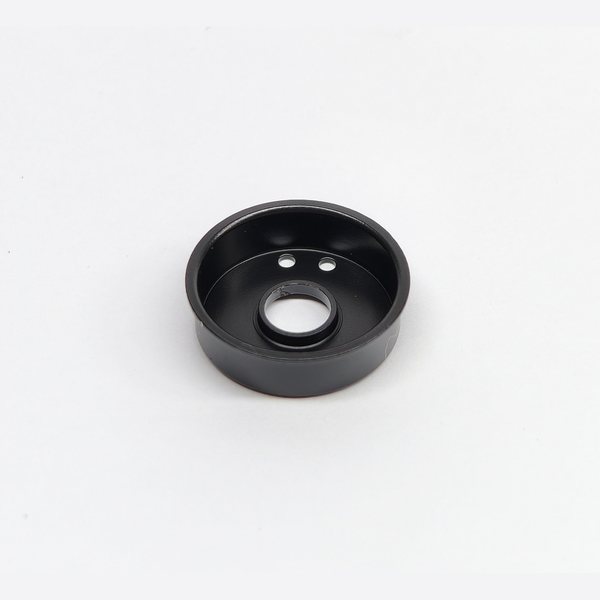
Black cathodic e-coat on a stainless steel ring-shaped support
Stainless steel

Ring-shaped support

Inner bore and outer diameter coated in a single pass, with no misses in deep cavities.
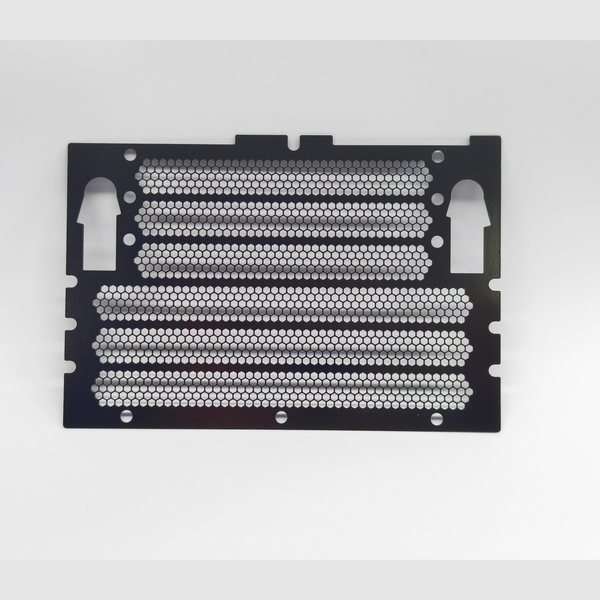
Black cathodic e-coat on an etched stainless steel mesh plate
Stainless steel

Etched mesh plate

Dense mesh walls coated evenly — no clogged holes, no bare metal showing through.
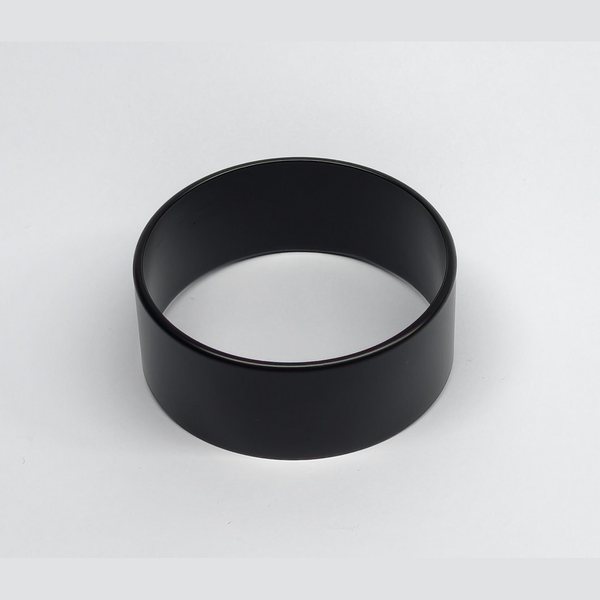
Black cathodic e-coat on a nickel-plated cylindrical ring
Nickel-plated steel

Cylindrical ring

Uniform film inside and out, with no discolouration of the nickel layer.
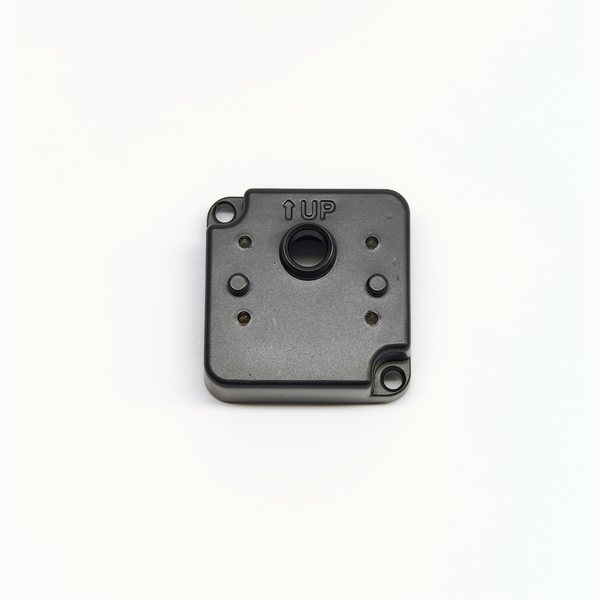
Black cathodic e-coat on a die-cast aluminium square housing
Die-cast aluminium

Square housing

No blistering or pinholes; complete coverage around the hole edges.
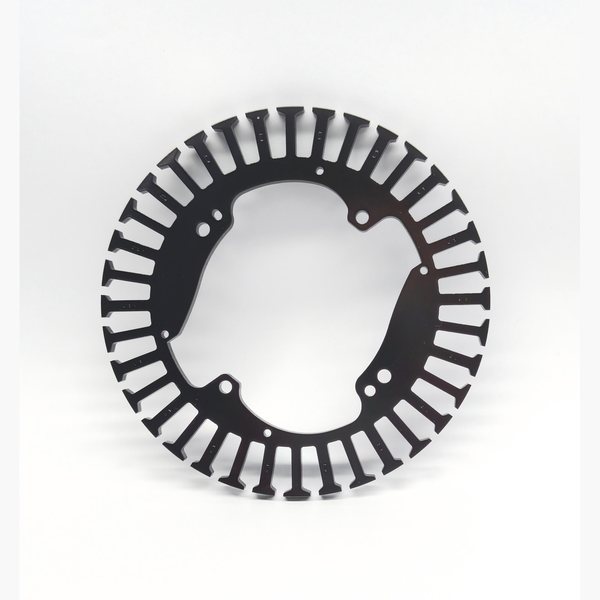
Black cathodic e-coat on a silicon-steel ring stator core
Silicon steel

Ring stator core

Continuous coating inside the teeth and slots, providing insulation and corrosion protection together.
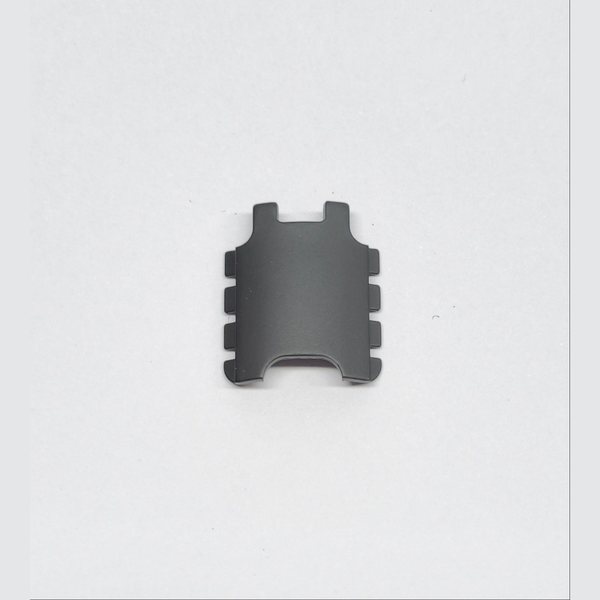
Black cathodic e-coat on a small galvanised steel stamped part
Galvanised steel

Small stamped part

The cut-edge zinc layer and the e-coat form two layers of protection.

View all product photos (11) →

WHY XINTAI

Why choose Xintai E-coat?

Our core capabilities and what sets us apart, in Q&A form.

Which metals can Xintai e-coat in black?
We can coat iron, stainless steel, aluminium, aluminium alloy, titanium alloy and magnesium alloy — six metal substrate families, supplied as stamped parts, die castings, CNC-machined parts, extrusions and MIM sintered parts. Each substrate gets a matched pre-treatment sequence (degreasing, surface conditioning, phosphating, passivation) so that adhesion and salt-spray performance stay consistent.
What film thickness and salt-spray performance can you achieve?
Standard black cathodic e-coat film thickness is held at 15–25 μm, with good thickness uniformity and no misses at edges or in cavities. In the neutral salt spray test (SST), stainless steel / aluminium alloy reach 1,000 hours or more (silicon-steel laminated cores about 48 hours). For electronic parts that need insulation, insulation resistance (500 V) can reach ≥10 MΩ. Specific values can be adjusted to customer drawings and industry standards, and are confirmed by test reports before mass production.
Can you take small-batch prototypes? What is the lead time?
Yes. We run two automatic and two manual e-coat lines: the manual lines are dedicated to small-batch, high-mix and complex-shaped prototypes and pilot runs, while the automatic lines handle stable mass production. Standard samples are completed within 3–5 working days of receiving your parts; mass-production lead time depends on order volume.
Which customers has Xintai served?
Our customers span consumer electronics, automotive electronics, drones and cross-border hardware, including several leading companies and their tier-1 supply chains (customer names are withheld under non-disclosure agreements).
How do you keep colour consistent between batches?
We use a Konica Minolta spectrophotometer from Japan and a ZGM gloss meter from Switzerland to check colour difference and gloss on every batch, keeping a standard colour panel and batch records; we also use a Fischer coating thickness gauge from Germany for film-thickness spot checks, so appearance stays consistent across batches and colour-mismatch risk at our customers' assembly lines is reduced.
PROCESS

Black cathodic e-coat process flow

Eight standardised steps from jigging to final inspection — each one affects the quality of the finished film.

1
Jigging
Fixtures chosen to suit part geometry, ensuring conductivity and drainage
2
Degreasing
Removes oil, fingerprints and machining residue
3
Rinsing
Multi-stage DI-water rinsing with conductivity control
4
Surface conditioning and phosphating
Forms a conversion coating that improves adhesion and corrosion resistance
5
Cathodic electrocoating
Parts act as the cathode, so paint deposits evenly
6
Ultrafiltrate rinse
Recovers paint solids, cutting waste and pollution
7
Curing
Controlled-temperature bake forms a dense cross-linked film
8
Final inspection
Film thickness, colour, gloss, salt spray and insulation all checked
CASE STUDIES

Case Studies

Typical process solutions for common applications; all customer details are anonymised.

Consumer electronics · MIM parts

Matte black e-coat for MIM hinges and SIM trays

MIM precision parts for foldable phones and TWS earbuds, finished in matte black cathodic e-coat with film thickness controlled at 18–22 μm and batch colour difference ΔE≤1.0, combining a fine feel with wear resistance.

MIM sintered partMatte blackΔE≤1.0
Automotive electronics · Salt spray

High-corrosion black e-coat for motor cores

For automotive motor cores and sensor housings we use a high-corrosion-resistance formulation: silicon-steel laminated cores reach 48 h+ in salt spray, with insulation resistance (500 V) ≥10 MΩ, meeting the long-term reliability requirements of vehicle environments.

Silicon steelSST≥48hInsulation ≥10 MΩ
Drones · Lightweight construction

Gloss black e-coat for aluminium structural parts

Gloss black e-coat for drone gimbal brackets and airframe aluminium parts, covering complex cavities and deep holes with a uniform film and no runs — appearance and light weight together.

Die-cast aluminiumGloss blackComplex cavities

View more case studies →

FAQ

FAQ

What does Dongguan Xintai Metal Surface Treatment Co., Ltd. do?

The company specialises in metal surface treatment and heat treatment processing. Its core business is black cathodic electrocoating (CED) — matte black, gloss black and similar finishes — for hardware parts in iron, stainless steel, aluminium, aluminium alloy, titanium alloy and magnesium alloy. It also offers spray coating, coating equipment manufacturing and sales, and metal product R&D and sales.

Where are you located? Is it easy to get to?

We are at Room 501, Building 3, No. 252 Dalang Shuixin Road, Dalang Town, Dongguan, Guangdong, in Guangda Manufacturing · Dalang Tech Park, next to the Guan-Shen and Chang-Hu expressways. Shenzhen and Huizhou are both within an hour's drive, which makes factory visits and logistics convenient for customers around the Pearl River Delta.

How does black e-coat differ from blackening and spray painting?

The three differ clearly in principle and performance:

  • Black e-coat (CED): the part is the cathode, and water-borne paint deposits evenly under an electric field — uniform film, full coverage of edges and cavities, no runs, far better salt-spray resistance than blackening, and paint utilisation above 90%.
  • Blackening (oxidation): a chemical reaction forms an oxide film only 1–2 μm thick; corrosion resistance is weaker and oil immersion is usually needed as a top-up.
  • Spray painting: adhesion relies on spraying, so complex parts easily get missed corners and uneven thickness; paint utilisation is around 50%.

For precision hardware that demands uniform film thickness, high salt-spray resistance and consistent appearance, black cathodic e-coat is the better choice.

What is the minimum order quantity? Do you offer free samples?

We support small-batch prototyping; the minimum order quantity depends on part size, substrate and process complexity. Free samples are available for standard parts, delivered with test data within 3–5 working days of receiving your parts. Mass production is then scheduled by order volume, with lead time agreed separately.

View all FAQs →

Need a black e-coat solution?

Send us drawings or samples and we will propose a process plan and quotation, with free samples included.

Contact us now
Call us +86 181 2376 0267